A cat is a companion for many years. But how many, exactly? The answer depends on breed, lifestyle, diet and the care your cat receives. In this article you will learn the average lifespan of a cat, which breeds live longest, how to convert cat years into human years and what you can do yourself to help your cat live a long and healthy life.
What is the average lifespan of a cat?
The average domestic cat lives 12 to 18 years. Many cats reach 15, and cats over 20 are no longer rare. Thanks to better nutrition and veterinary care, cats today live considerably longer than they did a few decades ago.
The official record belongs to Creme Puff, a cat from Texas who lived to 38 years and 3 days.
Indoor or outdoor cat: the difference
Lifestyle makes a big difference:
- Indoor cats tend to live the longest: often 14 to 18 years or more. They face little risk from traffic, fights and infectious diseases.
- Outdoor cats live shorter lives on average, mainly because of road accidents. Their average lifespan is therefore noticeably lower, although many outdoor cats still reach a ripe old age.
An indoor cat does need extra stimulation: scratching posts, places to climb, playtime and perhaps a secure balcony or catio help prevent boredom and weight gain.
Cat life expectancy by breed
Breeds differ from one another. These figures are averages; an individual cat may live shorter or longer.
| Breed | Average life expectancy |
|---|---|
| Domestic shorthair / European shorthair | 14 to 18 years |
| Siamese | 15 to 20 years |
| British shorthair | 12 to 17 years |
| Persian | 12 to 16 years |
| Ragdoll | 12 to 15 years |
| Maine Coon | 12 to 15 years |
| Russian blue | 15 to 20 years |
Mixed-breed cats often live long lives because of their genetic diversity. Want to know more about specific breeds? Read our articles on the ragdoll and the Maine Coon.
Converting cat years to human years
The famous rule of thumb 'one cat year equals seven human years' is wrong. Cats mature very quickly in their first two years and more slowly after that. Vets usually use this calculation:
- A cat's first year equals about 15 human years.
- At two years, a cat is about 24 in human years.
- After that, each cat year adds about 4 human years.
| Cat's age | In human years |
|---|---|
| 1 year | 15 |
| 2 years | 24 |
| 5 years | 36 |
| 10 years | 56 |
| 15 years | 76 |
| 20 years | 96 |
From around ten years old, vets consider a cat a senior.
How to help your cat live longer
You have more influence than you might think. These points make the biggest difference:
- Keep your cat at a healthy weight. Obesity increases the risk of diabetes, joint problems and bladder problems.
- Have your cat neutered or spayed. It reduces roaming, fighting and certain diseases.
- Visit the vet every year, and from about ten years old preferably twice a year. Kidney disease and an overactive thyroid are common in older cats and often treatable when caught early.
- Look after the teeth. Dental problems are very common and cause pain and inflammation.
- Make sure your cat drinks enough, for example with wet food or a water fountain.
- Provide exercise and enrichment, especially for indoor cats.
A memory that lasts forever
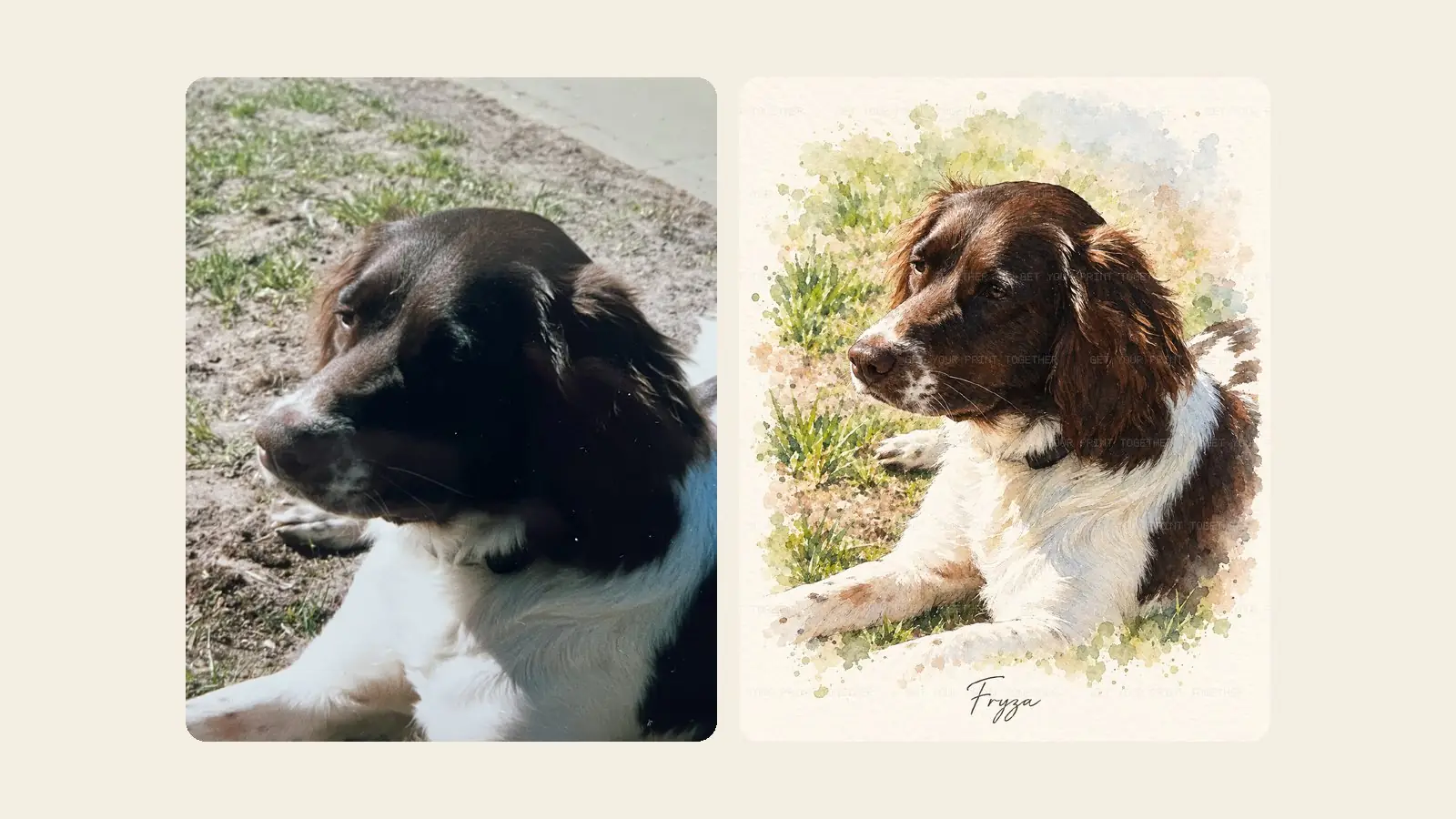
However old your cat becomes, the years together fly by. A portrait on the wall keeps those memories alive. At Get Your Print Together you turn a photo of your cat into a work of art in styles such as Renaissance, Van Gogh or a warm studio portrait. You first see a free preview and then choose a poster or download from our products. Has your cat passed away? Read our pet memorial ideas.